Words mean nothing without a plan.

Scroll down to see the actions I’m proposing all of which will go before the public in town halls for your feedback. This campaign isn’t about what Ox wants. It’s about what YOU want and what you decide.

A Voice for Texas’ 30th District—Built on Accountability, Wholeness, and Service

I’m Oxford Nordberg, my friends call me Ox. — a husband, father, Christian, and independent candidate for Congress in Texas’ 30th District.

I didn’t grow up privileged. I didn’t inherit power. I didn’t arrive here through party politics.
I came here through failure, responsibility, redemption, and hard‑earned humility.

I’m running because too many families in TX‑30 are forced to navigate broken systems, while politicians argue past them. I believe government should collaborate, listen, and fix what’s broken—without tearing each other apart.

I don’t believe mocking other candidates, party lines, or ideologies gets us anywhere. I may disagree with other legislators, but I will find common ground where it exists and work alongside anyone willing to serve this district well.

Faith guides my character. Service guides my work.

I will listen first, act responsibly, and represent Texas’ 30th District with dignity, accountability, and respect for the people I serve.

I’ve lived what happens when systems fail—and what happens when people take responsibility instead of shifting blame.

I grew up in an abusive home. As a teenager, I made bad decisions and faced legal consequences. I was sent to McKinney Job Corps, where for the first time, someone saw potential instead of a problem. That opportunity changed the direction of my life.

Later in adulthood, I repeated many of my own mistakes. In 2005, because of my selfishness and infidelities, my marriage ended in divorce. That season of loss forced me to confront who I really was and who I was becoming.

For years, I searched for identity in all the wrong places. In October 2022, I stopped running and surrendered my life to Jesus Christ. Transformation didn’t happen overnight—but commitment did. In April 2024, I was baptized at Gateway Church in North Richland Hills, marking a public declaration of accountability and surrender.

Today, I’m not a perfect man—but I am a changed one.

I’ve learned:

  • How broken systems trap people instead of helping them

  • How pride damages families and communities

  • How accountability leads to healing

  • How listening matters more than posturing

I’m running as an Independent because no party has a monopoly on solutions—and because TX‑30 deserves a representative who answers to people, not platforms.

I attend local meetings. I listen before speaking. I show up even when there’s no camera.

If elected, I will work with anyone willing to improve veterans’ care, strengthen schools, modernize government systems, protect neighborhoods, and support honest work.

I’m not running to be loud.
I’m running to be useful.

Why I’m Running for Congress

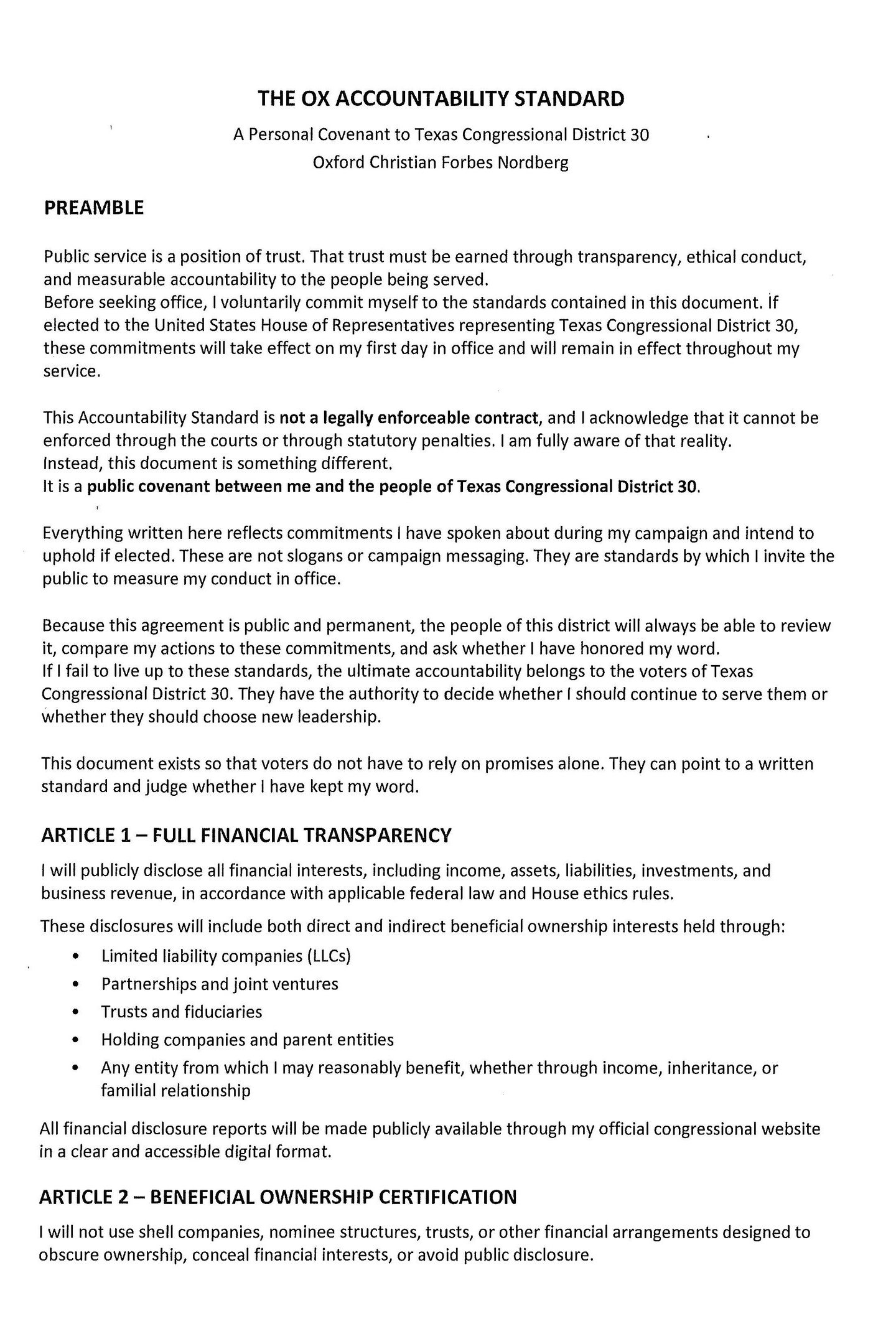
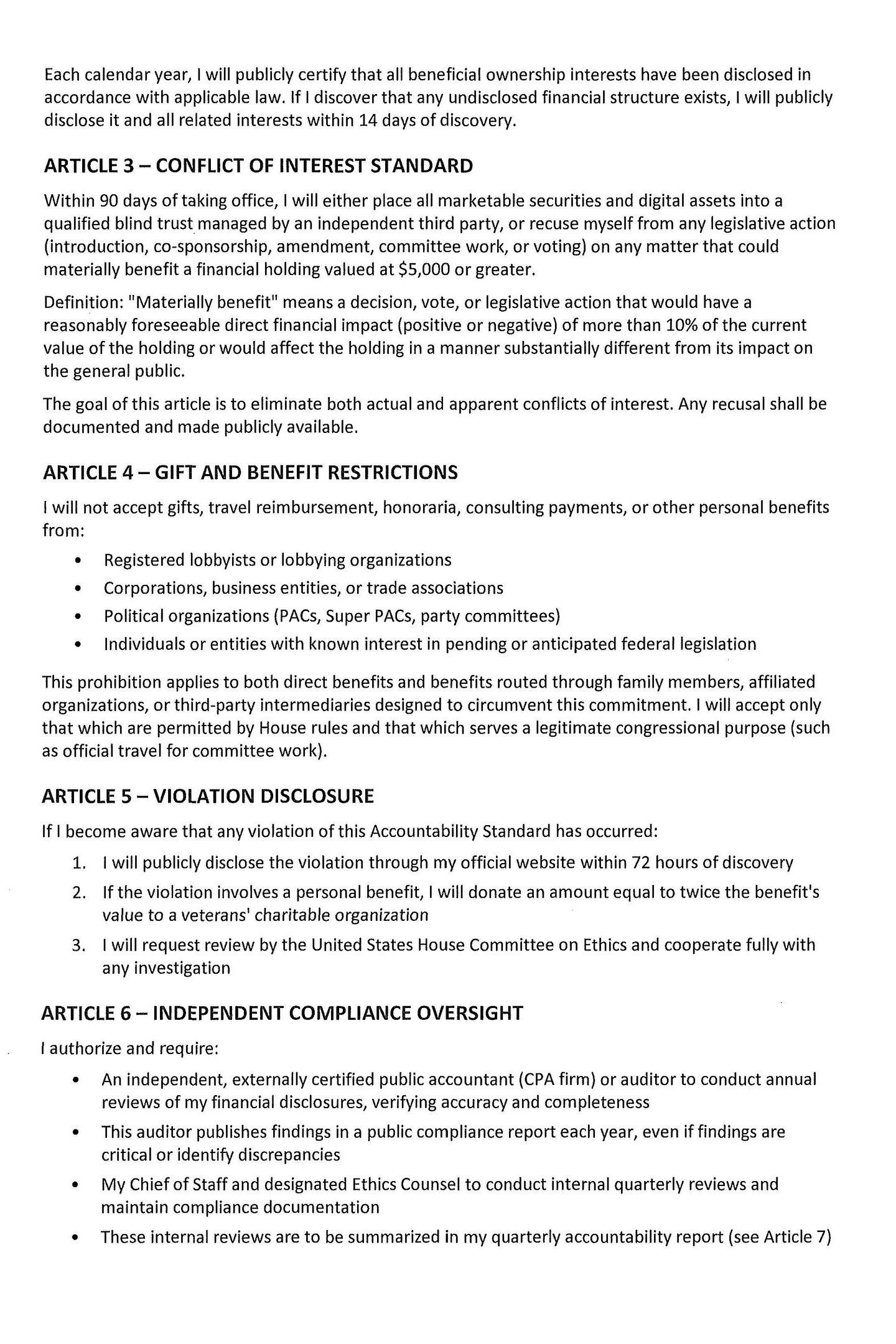
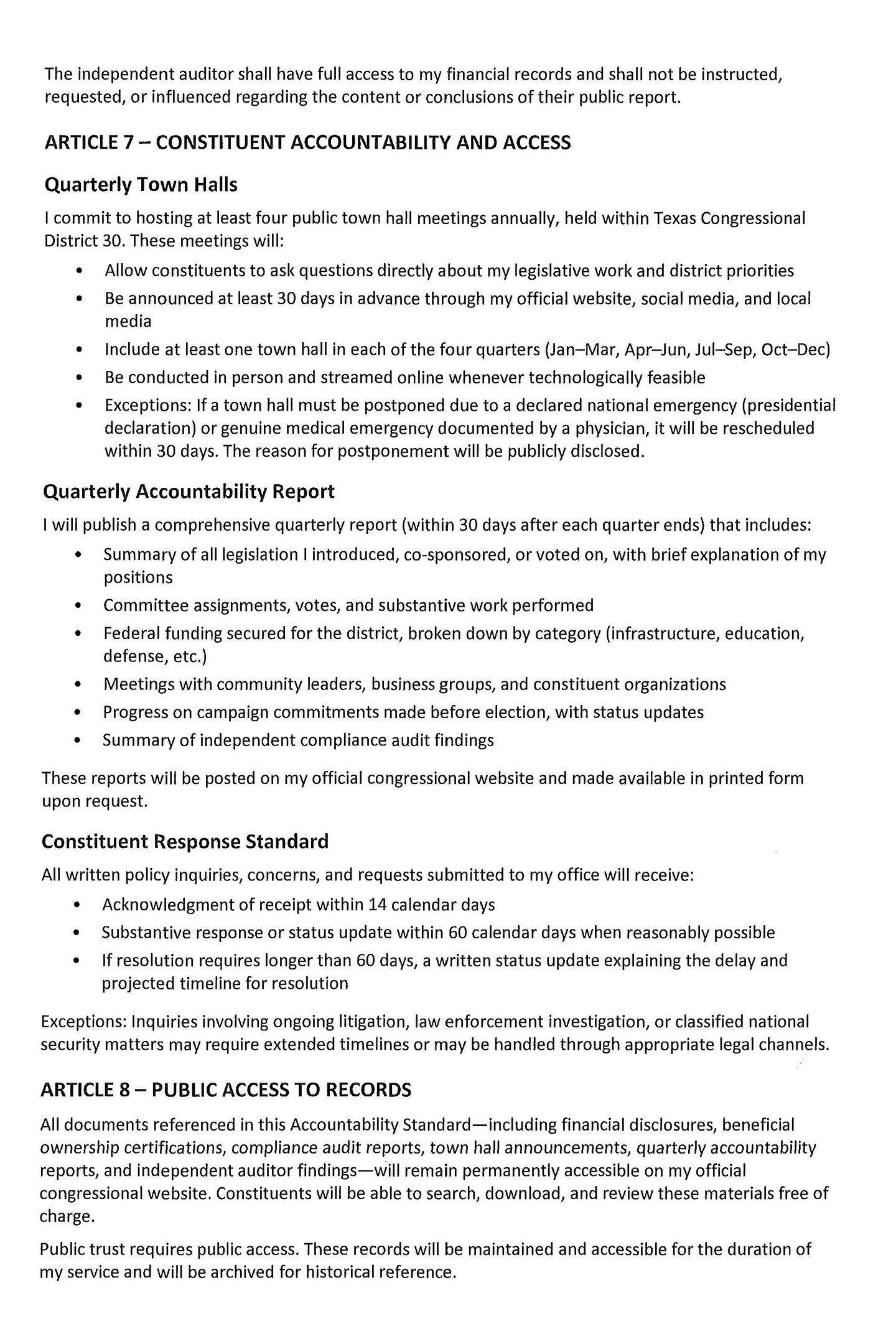
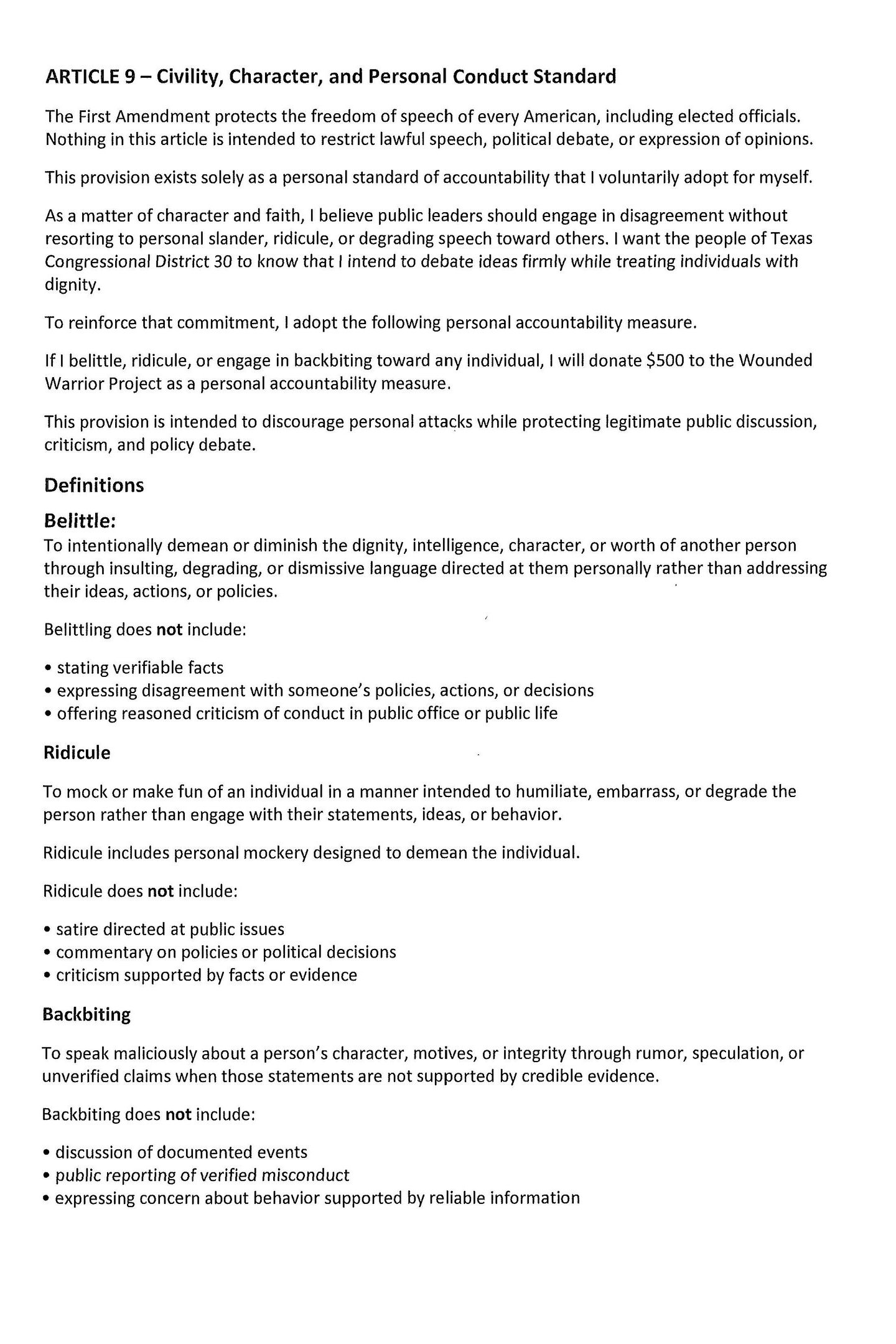
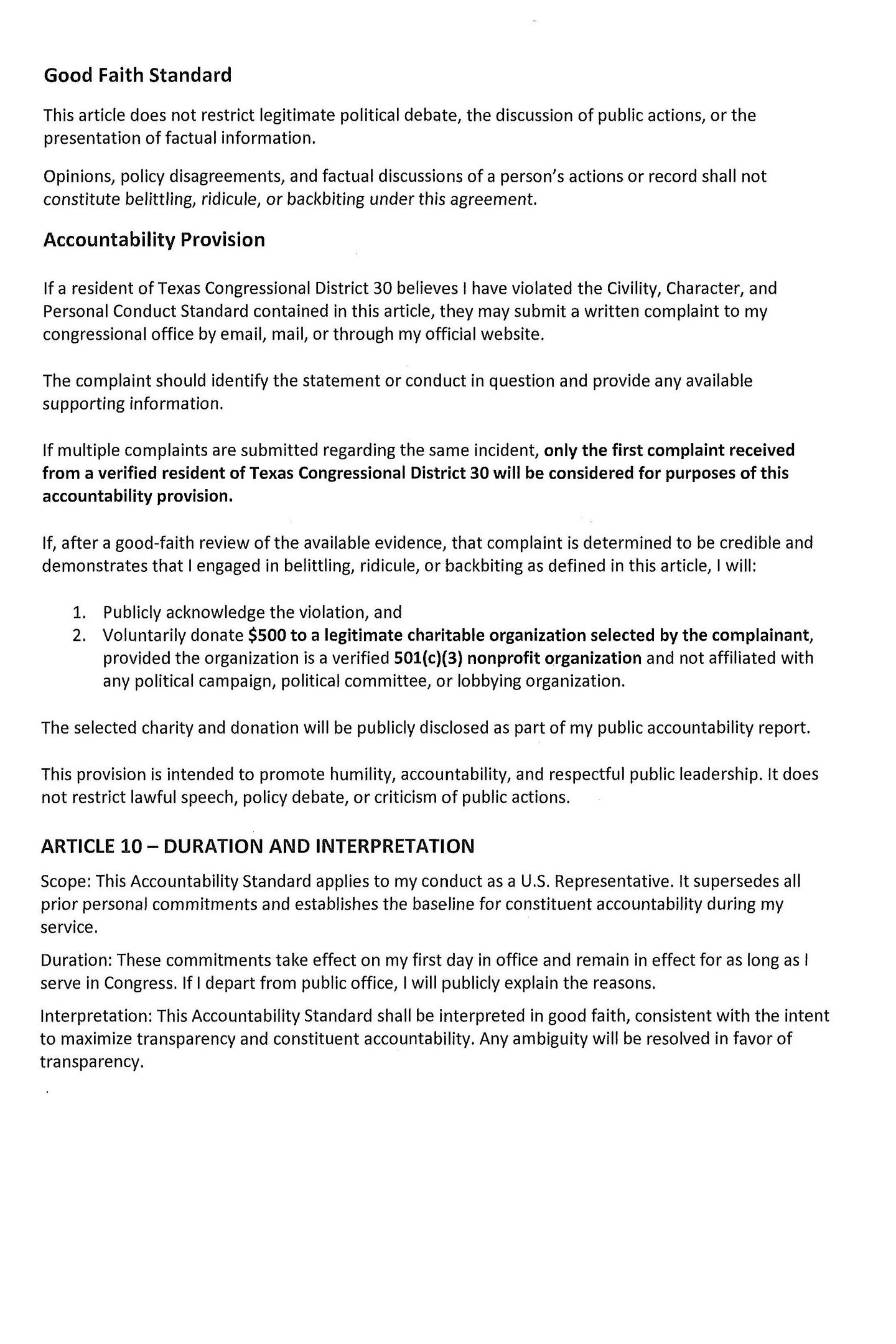
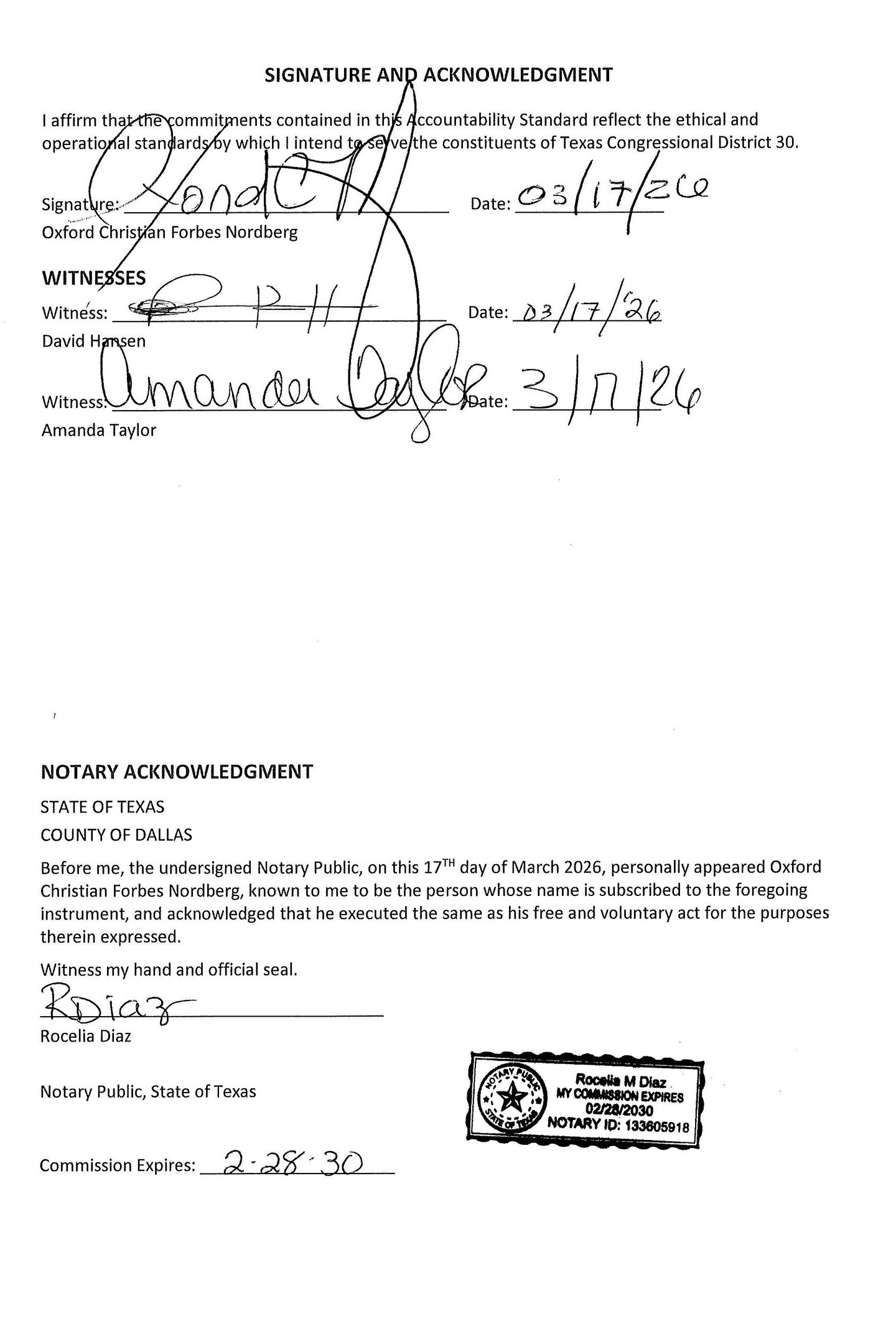
The Ox Accountability Agreement
Saturday, February 21, 2026
12:00 PM (Noon)
Dallas County Courthouse Steps.

COME MEET, TALK, SHARE YOUR CONCERNS

Monday's and Tuesdays: I will be at Town Halls, Duncanville, Lancaster, or Cedar Hill - Once I have confirmed dates and times, I'll list them here.

Wednesday & Thursday: I will be set up in public area's meeting people quietly and respectfully So we don't disturb our neighbors/gest.
5:00 to 70:00 PM

I would rather stand before God with integrity than
win by sacrificing my character.

Even $5.00 helps

Even 1 hour helps

Let's Bring Government into the 21st century

If something doesn't promote happiness, help, heal, or encourage people it is not of God.
I will serve you with dignity, grace and compassion.
My faith guides my personal life, my character, and how I treat people — but it does not control my legislation. I don’t write laws based on my beliefs. I write laws based on what serves the people, protects their freedom, and makes their lives better.

Actions to bring to the citizens of District 30 for discussion.

The federal government spends over $100 billion each year on information technology, yet much of it goes toward maintaining outdated systems that slow services, increase costs, and expose sensitive data to risk. The Federal Agency Information Technology Modernization Act of 2027 is a practical reform designed to fix that problem. This Act strengthens existing modernization law by requiring federal agencies to identify their highest-risk legacy systems, set clear performance goals, and modernize technology in ways that reduce delays, lower long-term costs, and improve cybersecurity. It builds on current oversight frameworks, increases transparency through public reporting, and ensures taxpayer dollars are spent efficiently—not wasted maintaining systems that no longer work. The focus is simple and accountable: modernize government technology, improve service delivery for the public, protect privacy and civil liberties, and make federal agencies work better for the people they serve.

Too many families live in communities where affordable, healthy food is hard to find. The Fresh Food Access and Neighborhood Markets Act of 2027 is a practical solution designed to bring fresh, nutritious food closer to home, especially in rural areas, Tribal communities, and underserved neighborhoods.
This Act supports small and independent grocery stores, neighborhood markets, cooperatives, and mobile food providers by helping them open, expand, or modernize in high-need areas. It builds on existing federal food and nutrition programs, strengthens accountability, and encourages local solutions—without mandates or bureaucracy.
The goal is simple: make healthy food more accessible, support local businesses, and improve community health—while protecting privacy, respecting local control, and ensuring taxpayer dollars are used responsibly.

Mobile Health Access and Community Care Act of 2027

2nd Opportunity & Reintegration Act of 2027

SPECIAL NOTE:
These actions are early drafts created for public conversation and community review. Before any proposal moves forward, it will be professionally reviewed by legal counsel, refined, and then presented to the residents of District 30 at scheduled meetings.

These ideas are shared with full transparency.
They are not promises — no action becomes law until it passes Congress and is signed by the President.

Too many people—especially in rural areas, Tribal communities, and underserved neighborhoods—struggle to access basic health care close to home. The Mobile Health Access and Community Care Act of 2027 is a practical solution designed to bring essential medical services directly into communities that need them most.
This Act supports mobile health units operated by trusted local providers such as community health centers, rural clinics, Tribal health programs, and public health departments. It builds on existing federal health programs, strengthens coordination, and ensures care is delivered voluntarily, affordably, and with strong privacy protections.
The goal is simple: expand access to preventive, primary, and behavioral health care, reduce avoidable emergency room visits, and meet people where they are—without replacing local providers or creating new bureaucracy.

The Second Opportunity & Community Reintegration Act of 2027 is designed to reduce repeat crime, strengthen public safety, and help returning citizens successfully rebuild their lives. The Act focuses on accountability paired with opportunity—expanding access to lawful employment, job training, transitional housing, and mental health and substance-use support for eligible non-violent individuals returning to their communities.
By partnering with employers, community organizations, and faith-based groups, the Act removes unnecessary barriers to work and stability while maintaining strong safeguards for victims, law enforcement, and public safety. Its goal is simple: fewer people returning to prison, safer neighborhoods, stronger families, and more people contributing positively to their communities.

Teacher Recruitment & Retention Incentive Act of 2027

America’s schools are facing a growing teacher shortage—especially in high-need communities. The Teacher Recruitment & Retention Incentive Act of 2027 is a practical, accountable solution designed to help schools attract, support, and keep great teachers where they are needed most. This Act creates a targeted federal grant program that helps states and school districts offer salary supplements, housing assistance, loan repayment, and professional development for teachers who commit to serving in high-need schools. It strengthens existing education laws, adds clear guardrails to prevent waste, and prioritizes local control, transparency, and measurable results. The goal is simple: stabilize classrooms, reduce teacher turnover, and give students consistent, high-quality instruction—without bureaucracy or empty promises.

Earned Humanitarian Parole Act of 2027

The Earned Humanitarian Parole Act of 2027 strengthens the rule of law by replacing chaos with structure. It creates a temporary, revocable humanitarian parole for long-term residents who come forward, verify identity, pass background checks, pay full-cost fees, file taxes, and remain crime-free.
The Act includes strong guardrails—excluding felonies, crimes of violence, trafficking, exploitation, fraud, and national security threats—and establishes a firm cutoff date that prioritizes enforcement against new unlawful entry and anyone who refuses to comply.
This is accountability with compassion—lawful, enforceable, and built to work in the real world.

Urban Workforce Mobility and Anti-Poverty Partnership Act of 2027

The Urban Workforce Mobility and Anti-Poverty Partnership Act of 2027 addresses persistent urban poverty by strengthening access to work—not expanding dependency. The Act supports locally driven partnerships that bring together employers, educators, workforce boards, nonprofits, and local governments to connect residents in high-poverty districts to in-demand jobs with family-sustaining wages.
By coordinating job training, apprenticeships, and supportive services such as childcare and transportation, the Act helps remove practical barriers to employment while strengthening regional labor markets that affect interstate commerce. The proposal emphasizes accountability, employer engagement, and measurable outcomes—offering solutions rather than promises.

Legislative Proposal Disclaimer

The policies and legislative proposals presented on this website reflect the goals, priorities, and policy positions of Oxford C.F. Nordberg as a candidate for public office.

All proposals are conceptual working drafts intended to communicate policy direction and legislative intent. They are subject to revision through the legislative process, including legal review, constitutional constraints, public input, committee consideration, amendment, and approval by the appropriate legislative bodies.

Nothing on this website should be interpreted as enacted law, legal advice, or a guarantee of legislative outcome.

Any references to budgets, timelines, performance targets, enforcement mechanisms, or anticipated outcomes are illustrative only and are provided to explain policy objectives—not to represent final statutory language or binding commitments.

Human Trafficking & Sexual Exploitation Crimes Act of 2027

Human trafficking and sexual exploitation—especially crimes involving children—are among the most serious violations of human dignity and public safety. The Human Trafficking & Sexual Exploitation Crimes Act of 2027 strengthens federal law to ensure traffickers are held fully accountable, survivors are protected and compensated, and enforcement is carried out firmly and constitutionally.
This Act does not create new crimes or lower due-process standards. Instead, it reinforces existing federal anti-trafficking laws by clarifying investigative authority, strengthening coordination between federal and local agencies, mandating restitution for victims, and ensuring traffickers cannot hide behind job titles, status, or influence.

Foreign Military Assistance Accountability & Conditionality Act

This Act ensures U.S. military assistance follows clear rules when serious allegations arise. It does not assume guilt or punish civilians. Instead, it sets timelines, requires independent review, and pauses aid only to specific units when accountability stalls. Humanitarian and defensive support can continue. The goal is consistent standards, transparency, and responsible use of taxpayer dollars.